Showing posts with label Leucism. Show all posts

Tuesday, October 11, 2011

"I'm Leavin' on a Jet Plane..."

As teased in a previous post back in August, this birder and as a direct result this blog are going international! For the first time in over five years I am getting back to England, the birthplace of my Dad and home to all of his side of my family. I am under 12 hours from catching my flight, and am very much looking forward to being on my way. On a relevant side note, I want to wish my Mom a very happy birthday! She and my Dad will be leaving Minnesota in a few days, and we will all get to meet up over in England and make a whirlwind trip through the country together. More on that in a moment, but first a few shots from a frosty stop before work yesterday.


Since having seen the Krider's Hawk a few days back while on my way to Denver I had been thinking of light Red-tailed Hawks. Then, while rushing from work to complete a couple of errands last week I passed the resident leucistic Red-tail on a power pole, and didn't have time to stop. So, yesterday morning I stopped off on my way to the office and attempted to find the bird in the reliable spot along the Middle Hyland Creek Open Space. Before really getting down to look through the trees I had to stop for yet another shot of Long's Peak at sunrise. One silver lining of these shortening days is the accessibility of sunrises!


As the sun cleared the horizon behind me my target became immediately obvious. I had been scanning through those trees fairly carefully earlier, and had either missed him in plain sight prior to the light hitting, or he had popped up to greet the rising sun and warm up a bit from the coldest night of the season so far. Such a cool bird to see. I had taken an angled line across the field to get a better direction with the light, and as I approached the cattails at the bottom of the draw I got another creature moving as well.


Unfortunately, my camera had been set for the hawk in the treetop, and the lighting was far from ideal. Still, it is always fun to be mere feet from a coyote, when it is moving the other way.


So here is my impression of a three year old mapping my upcoming route through England. I will spend two days in Windsor, with plans to visit Windsor Castle, Eton College, and do some dedicated walking and birding in the Great Park. My folks will arrive Friday, and we will head north, up the middle of the country, stopping at Rugby, then Maltby where we will join my extended family to celebrate my Aunt and Uncle's 50th wedding anniversary. Then it is off to the Lake District via a stop at Ripon. The return will feature stops in Ludlow and Chippenham. While this is not a dedicated 'birding' trip, (what of my trips are?), I do hope to have some new species to share on the blog in the days and weeks to come. I am so glad that Ebird has been rolled out globally - it will definitely help in identifying and recording what species I find over there.


All credit being due, I grabbed this map from a Google image search that led me to this nice site, and then scribbled all over it. Thanks and sorry, PicturesofEngland.com.

Thursday, March 10, 2011

Getting Ahead of Myself

I have a handful of shots I would like to post from the other evening just after work, but captured these images this morning and wanted to share.


First, the Great Horned Owls are still in place. This was the only check in over a week, lasted roughly 20 seconds, and since I know they are around that will be enough for a while. If I am on it I will try once next week after the time change to see if I can catch either one returning.

I had left early this morning, and was trying to decide if I should revisit Lower Church Lake, (it was frozen yesterday), when I spotted a large hawk silhouetted against the rising sun at the corner of 120th and Sheridan in Westminster.


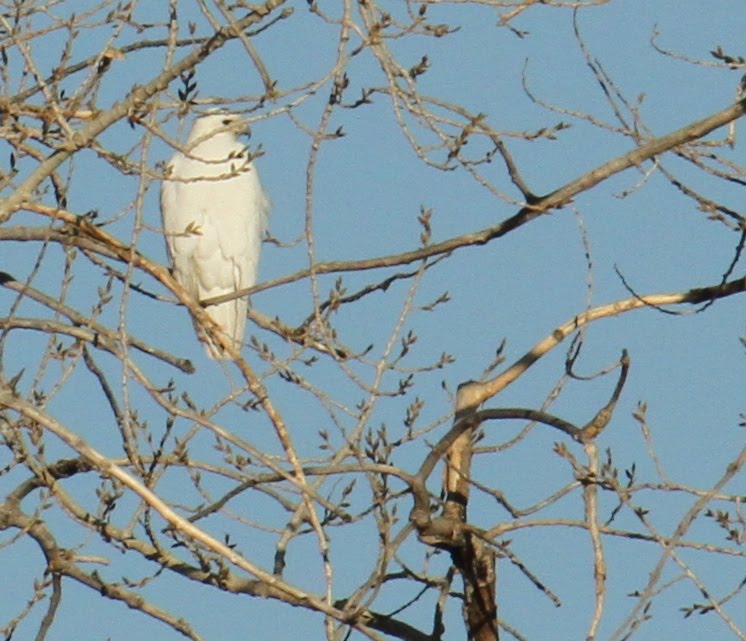
It took a bit of walking to get the right angle for these photos, but I had finally relocated the local leucistic Red-Tail Hawk.


I had been keeping an eye out for the bird, but heavy traffic and just dumb luck had kept me from spotting it on those days when I pass near its known hangout. It was good to see the bird and know that it is still around.


Reports of this bird, or its relatives, that I have tracked down take it back nearly ten years. It looks like the pair are settled in, and at least spent this morning near the established nest.


As I stated in my previous post, I will hope to capture some better pictures of this unique bird in the near future and share them as well - but then I did state that in my previous post as well! Either way, it was a great start to the day to know that this cool bird is still around. Now I will know that my stolen glances at treetops as I drive by are not just wishful thinking.

Thursday, February 11, 2010

A Local Familiar Face


This morning I left the house early to see if I could find the Great Horned Owls I had heard two nights before at Front Range Community College. I checked all around, but didn't manage to find anything.

So, to not make a total waste of the morning I headed over to the intersection of 104th and Sheridan, where for years now a rare Red-tail Hawk has made its home. This is a leucistic, or partially albino Red-tail Hawk. It makes its home in the Cottonwood trees around some of the holes at the Legacy Ridge Golf Course.


The hawk gained a bit of notoriety a few years ago when it suffered a hazard of its home. It was found and taken to the Birds of Prey Foundation with a broken wing, which according to reports was caused when it was struck by a golf ball. I have seen the hawk several times as I have driven past on the busy thoroughfares, but have never stopped or attempted to photograph it.


As the days get longer I will try to get back and do this beautiful bird better justice. My attempts to take more creative control of my camera are still suffering some growing pains, and a cloud bank in front of the rising sun required that all these shots go through a bit of brightening and noise reduction to get them where they are. Despite that, still a bird worth sharing, and one that I hope to feature again soon.

Monday, July 20, 2009

Was I seeing things?

I had an interesting trip to the Rocky Mountain Arsenal National Wildlife Refuge yesterday afternoon. I'll have a photo report up later, but there were some birds along the way that had me head scratching and possibly seeing more than was really there.

Shortly after I arrived I scanned a large group of swallows on some hanging wires, it didn't take long to pick the one that was not like the others....


That is one white swallow...technically it is leucistic...a true albino would have the pink eye indicating a total lack of pigment.

The first notably leucistic bird I have found in the wild, and I did it all by myself! Ok, not that major of a feat when there are hundreds of birds all hanging out together and all in plain sight. What became more interesting was what I saw later....


Am I right, is this a partially leucistic Bullock's Oriole? I only have my Peterson Guide to Western Birds with me this morning, but I do not see anything else to match what I am seeing here.


Then to make a strange coincidence even more unlikely, I saw this bird at the far end of the lake.


I can't say for certain if they were or were not the same individual - although the first one appears to have more white where the Bullock's should have the black eye-band - but differences in time and light angle make it impossible to tell.
Once again nature throws so many questions my way...
Do Bullock's Orioles go through a light molt? This young Oriole seems to suggest otherwise, but that one may have been further along....
If it (they) is (are) leucistic how uncommon would it be to have two in the same area? Are multiple leucistic individuals in the same brood possible? Common? Rare?
I don't think it likely, but can environmental factors increase the emergence of recessive genes?
Finally, am I just seeing these species because this is the season for hatches? Since I have really only been doing this since last October it is entirely possible that each summer hundreds of pale individuals are born, and then due to natural selection are weeded back out of the flocks by the time fall migration rolls around.
As always, if anyone has insight please feel free to comment or email me at daveabirding@gmail.com.