Showing posts with label Denver County. Show all posts

Wednesday, September 28, 2011

City Park - Denver


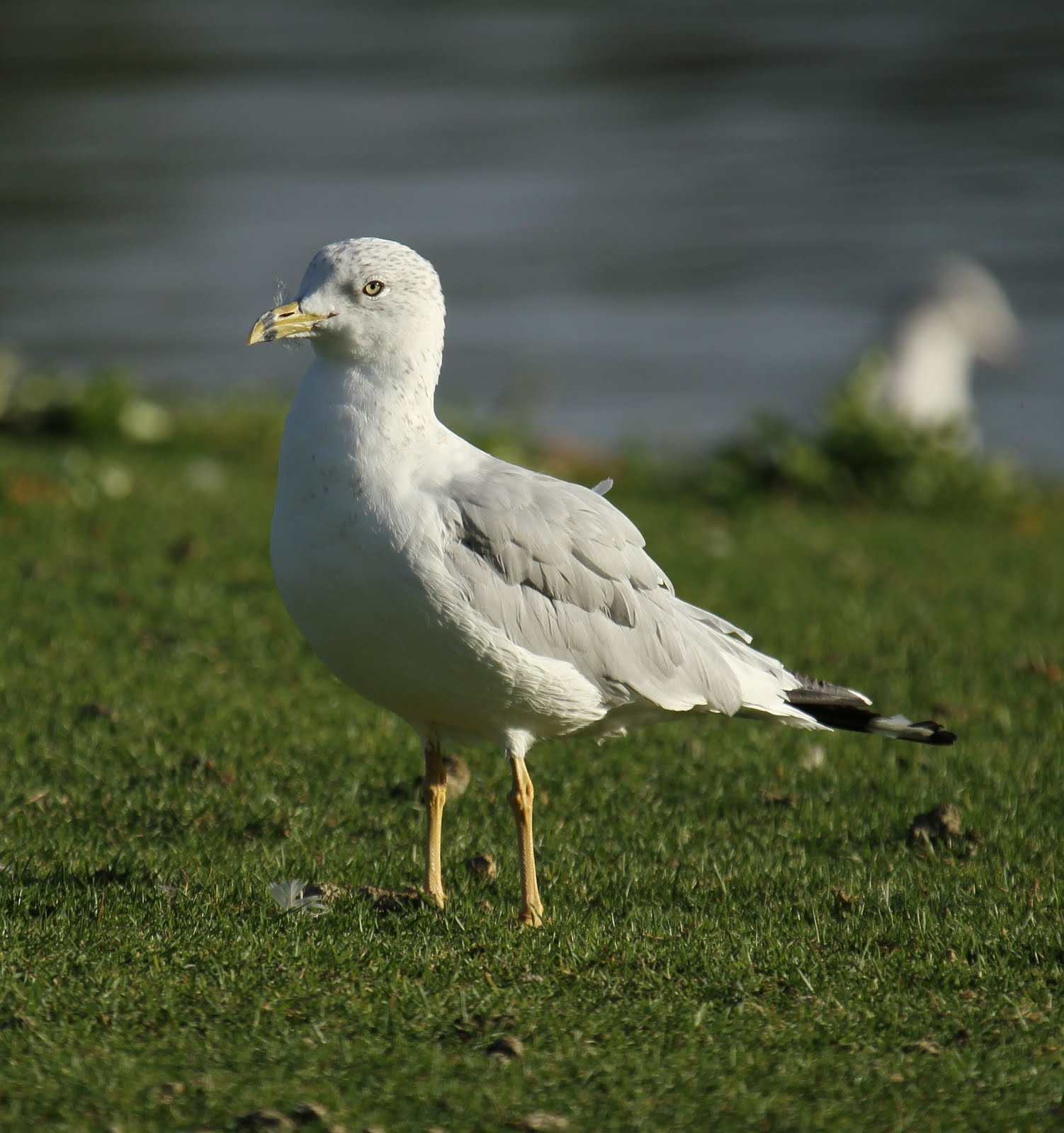
Monday evening; on my calendar, the September meeting of the DFO at the Denver Museum of Nature and Science. I had missed the August meeting while I was in New Orleans, so it was good to have a reason to head back down to Denver. As I try to manage when my schedule allows - I headed down early and walked with camera in City Park in the late afternoon. A Ring-billed Gull was enjoying the lakeside in the afternoon light.


Walking further I reached 'Duck Pond', where among a handful of species this Double-crested Cormorant was airing its wings with a few slow beats. Those blue eyes are great when they catch the light. Double click the photo if it doesn't show up in the blog formatting!


I continued my loop, cutting back over to City Park Pond, and spent some time with the Snowy Egrets that remained near the island that hosts their rookery. This one wasn't in the best light, but I really liked the patterns of the water in the background.


I unwittingly timed my walk to complete at the Museum steps just as the sun was sinking beyond Denver. Despite showing my need for a graduated neutral density filter, this picture managed to capture enough of the sky color while preserving the detail of the pond, pavilion, and capital dome. Below, an exposure set up to capture more of the color of the sky.


I am always pleased when nature and events come together to provide a memorable scene. Being at one of the iconic photographic views of Denver, on a mild evening in September, with colors abounding and people out enjoying the evening was just fantastic. Not having my short lens in hand, and not being ready with a filter are just reasons for me to keep trying for improvement!

Wednesday, April 27, 2011

At the Rookery - Part 2 - Snowy Egrets


In addition to the Black-crowneds there were Snowy Egrets, lots of Snowy Egrets. They are fairly common along the Front Range, but I usually see them in one-sy two-sies. My count on Monday reached 56, and that did not really account for all the motion between the trees, water, and ground for these birds.


Some were quietly doing a bit of material selection for nest improvements...


...while others would get downright territorial, chasing one another around the island as they displayed their wispy plumes. -Tough to take a bird seriously as a tough guy with that lacy look, but the most aggressive would occasionally run a Canada Goose off a few feet.


Seeing all those birds in their disheveled breeding getup was a big change. I am accustomed to the lone, sleek bird working a shoreline with purposeful steps - flashing those yellow feet as they proceed.


Here the picture of mass activity and interaction was altogether different, and entertaining. A great way to spend an hour in Denver on a springtime evening.

At the Rookery - Part One - Black-crowned Night-Heron


Monday evening was the last meeting of the D.F.O. (Denver Field Ornithologists)for the season. So after work I headed to Denver and got a chance to do a bit of birding in City Park before it was time to head inside.


It wasn't so much birding, as watching the activity at the rookery. Of the two rookeries in the area the one I spent my time at on Monday was the smaller and more diverse. It features nests of Black-crowned Night-Herons, Snowy Egrets and a few Double-crested Cormorants. The other, larger, rookery is almost exclusively filled with the nests of hundreds of Double-crested Cormorants. Last year my visits must have preceded any of the nesting activity of the Herons and Egrets, because I had not seen those species at the park in the past.


Getting a chance to watch so many of each was fun. A couple of Night-Herons were grabbing twigs for nest maintenance from the tree above my head. They would move precariously through the limbs and select the perfect stick before returning to their island. After a few minutes of sitting the entire colony seemed to forget my presence and were much more intent on displaying and squabbling, and keeping out of the way of the Canada Geese, and their efforts to establish pairs.


There were well over a hundred Black-crowneds in the nesting colony, but this lone bird in juvenile plumage was a bit of a wonder for me. I presumed, and it seems to be backed up by online reading, that this would be a year old bird. Dates for birds showing their "Formative Plumage" (Birds of North America Online) extend into September of the year following their hatching. I found it odd that there was just a single bird hanging out that was shoeing that plumage. Is it a 'momma's bird' afraid to break out on its own and hang with the others? An overachiever - the Doogie Howser of birds, trying to hang with the adults ahead of time? Or as I had initially thought, but now seems to be unlikely, that it was a lone bird that was late to molt into adult plumage.


Very cool to have so many nesting birds in such an approachable, urban location. If you are in the area I recommend stopping by to check out the activity.

Tuesday, March 23, 2010

Bluff Lake


Yesterday was Bloodmobile day at work! Always a good feeling to give some blood and know that my part has been done to help save some lives.
Anyway, after work I headed towards Denver where the monthly DFO was being held in the evening. I had a couple of hours before I needed to be there, and randomly headed into Denver. I ended up finding what appears to be a newer Nature Preserve on the eastern edge of the Stapleton Redevelopment area. The lake, its namesake bluff, area wetlands and Sand Creek all combine to give this area potential, beyond its urban area. It has some tough factors, it is surrounded on two sides by interstates, with the Denver County jail and some warehousing industrial space as a buffer. The bluff side has more of a cushion, but the space looks slated for more housing and commercial development over time. Those factors, of course, make the space all the more valuable as a protected habitat - but if you head over for some Denver County birding be aware that you will be fighting some heavy noise pollution to pick out calls.
I have a feeling that despite all that I may have to make some return visits in the future. The female Mountain Bluebird (above) was just one of the fun birds I saw as I walked the loop around the lake. It was a nice sign of spring, the first that I had seen this close to home.


Much later, as I approached the creek near the end of my walk, I saw a small group of Yellow-rumped Warblers. They can occasionally hang around in the area, but these were my firsts of the season. Soon enough they will be everywhere. Funny, we are getting more and more signs of getting into springtime birding, yet I am now watching the snow fall, and the forecasts are talking anywhere from 5-18 inches of snow in the next 30 hours.


Ah, Springtime!

Of course, I am always careful to check dense areas of overgrown branches in woodlots as I pass. Do you see what I saw and heard as I walked by? Click on the image to get a larger view.


Here is the Great Horned Owl in a tighter crop. Not the clearest view, but I would never have seen it had I not heard a 'hoot' as I was passing. Just one of the reasons I really like owls. Their camouflage is so well developed that after I had located this one, and tried to shift to get a better view, I had to work again to relocate it.

Here's hoping some of the early arrivals are prepared for the snow over the next few days. Drive safe out there, and if you haven't done so before get out there and donate some blood!

Tuesday, January 26, 2010

City Park Denver - DFO Meeting Birding


Last evening was the first monthly DFO (Denver Field Ornithologists) meeting of the year. I needed to pay my dues, and coincidentally the keynote speech was going to be given by Bill Schmoker. Bill is one of the elite Colorado birders, and a person whose blog really jump started my birding activities when I was still a complete novice and leaning heavily on the Internet for general information and tips. Seeing his photography was a great add to the evening - there were even a couple of shots from the 2008 Boulder CBC that I recognised.
One of the appealing aspects of the DFO meetings for me is that I wrap up my work day at three on Mondays, and so can use the hours before the meeting to do some birding at Denver's City Park. I had just stepped out of the parking lot when I spotted an accipiter cutting across the sky above. I am sure the museum visitors were a bit perplexed by the man with a big camera who suddenly rushed back into the parking lot. Oh well, if they had followed my look they would also have gotten to see this Cooper's Hawk perched above the lot. With all the activity along Colorado Blvd, and in and out of the museum I only merited an occasional glance from the Coop. Of course that was just fine by me, I got my fill of good looks and headed off, leaving the hawk to keep an eye on the lot.


My tantalizing look for the owls that I believe must be around turned up nothing, but a walk along the back of the Denver Zoo took me up to Duck Lake. The cormorant rookery is empty for now, but the lake offered a bit of open water. When I arrived it was occupied by just a handful of waterfowl. I had great relative numbers of Hooded Mergansers and Common Goldeneye, the one on the left below I believe to be a first winter male. While I was looking yesterday I thought it might have been some kind of hybrid with that extra white. I headed on, searching the trees for raptors or owls, and soon from a distance I watched as roughly 2500 geese descended on the valuable watery real estate.


Not all of them had finished grazing though, and I frequently found myself surrounded by large flocks of Canadas, who displayed varying degrees of chill as I passed. Then, I heard a distinct call - almost approaching gullish. I looked over and saw two geese that were not like the others. They were very similar to one I had seen at the park last year, and even commented on at the time. Last year, seeing only a single individual I had dismissed it as a released domestic, as many urban parks attract descendants of former captive birds. This year I looked more closely, and after some more checking this morning am confident that I added two Greater White-fronted Geese to my list. Um-um, that humble pie tastes good! Finding the Greater White Fronted Geese certainly made my walk through large areas of 'goose leavings' and past some less than welcoming individuals worth while. It even helped to console me on not finding any owls last evening. Oh well, there will be several more months, hopefully with warmer dusk temps, before the summer layoff where I may have more luck.


2010 Count: 54
Lifetime: 204

Monday, January 11, 2010

A Whole Mess of Mergansers


On my two recent visits to the South Platte river's course through Denver I have made an effort not to be sucked in for looks at the Barrow's Goldeneye, that is the locale's star attraction at the moment. Sure I have sought him out, and have successfully located him each time. It wasn't until I read another birders report from the area that I realized I might be missing something while I was there. Unfortunately I can't relocate the email or I would give due credit, but someone reported seeing all three Merganser species on their visit. I have seen two fairly regularly, both Common and Hooded Mergansers. Hooded Mergansers (female above and male below), were documented in my Collateral Duckage post from last month. Last weekend they were still present and I recaptured both, with the male showing a relaxed view of his hood this time.

Common Mergansers were there as well, and present in the most numbers. The female below shows the white neck and cheek that help to confirm her identity. Also of note on this individual is the mismatched length of her bill, which seems to have been due either to some past accident to her upper, or an abnormal growth on her lower mandible.


Here, two male Common Mergansers were shooting the rapids near the Florida Ave bridge. Mergansers are long and low slung anyway, so when they get in the rougher sections they practically disappear between the wave crests. For these guys note the plain white lower body, which runs unmarked from neck to tail. From a distance they can seem a bit like a Goldeneye, except for the long orange bill. That mistake is one that I have gotten well past, but what I learned yesterday is that I had been making a different oversight and not even realizing it.


Here was a picture that I snapped of the celebrity Barrow's on Saturday, swimming along with his Common Goldeneye girlfriend. What I overlooked at the time, and even on my first review of the shots, was that the Merganser swimming behind them was not Common at all.


It is a Red-breasted Merganser! I did notice the brilliant red eye, but thought it was just catching more glare in the midday sunlight. As I looked closer another difference became evident. Look closely below the neck!


The dark coloring dips forward, giving this merganser its name worthy reddish breast. I am now left to wonder if I have been overlooking these guys for a year, or if this was one that I can chalk up to hiding in plain sight, behind an even greater rarity. Either way, my first life bird of 2010 is in the books, the Red-breasted Merganser.
2010 Count: 34
Lifetime: 202

Saturday, January 9, 2010

South Platte Saturday


I returned to the stretch of the South Platte river this morning to see if I could relocate the Barrow's Goldeneye that has remained in the area. Nature often has a way of presenting its own agenda, and today was no exception. Today the star of the show was this American Kestrel, who was waiting in the parking lot when I returned and was willing to pose, unconcerned, as I approached and got a fun series of shots.


Urban adjusted birds are just fantastic! Why worry about a guy with a camera when trains, trucks, and heavy recreational use are a part of the everyday environment? I was able to approach quite close as the bird focused on joggers, and other activity in the area.


The Barrow's Goldeneye was still around, and seemed to be enjoying the warmer temps with his special Common Goldeneye lady friend. There were a number of birders along the river, and I hope they were able to track him down as well. I finally found him back where I started, just north of the Florida Avenue bridge.


All of the usual waterfowl were present, and in some cases seemed to be around in even greater numbers than the last time I had visited. The Killdeer above was calling its name loudly, letting me know that there were more species to be seen than just waterfowl.


One more shot of the Kestrel, poised for takeoff! Enjoy the weekend everyone!