Showing posts with label Double-crested Cormorant. Show all posts

Wednesday, September 28, 2011

City Park - Denver


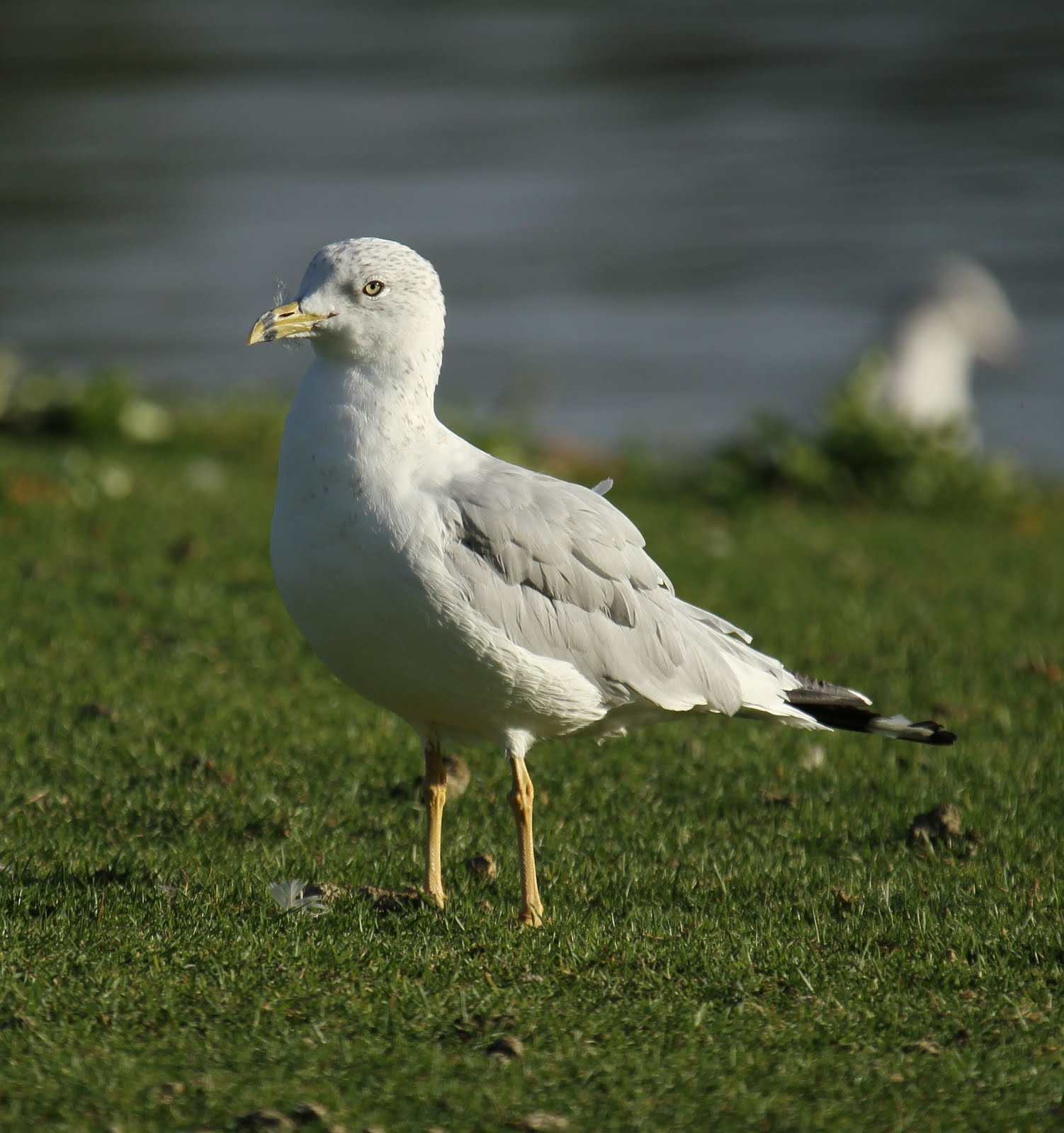
Monday evening; on my calendar, the September meeting of the DFO at the Denver Museum of Nature and Science. I had missed the August meeting while I was in New Orleans, so it was good to have a reason to head back down to Denver. As I try to manage when my schedule allows - I headed down early and walked with camera in City Park in the late afternoon. A Ring-billed Gull was enjoying the lakeside in the afternoon light.


Walking further I reached 'Duck Pond', where among a handful of species this Double-crested Cormorant was airing its wings with a few slow beats. Those blue eyes are great when they catch the light. Double click the photo if it doesn't show up in the blog formatting!


I continued my loop, cutting back over to City Park Pond, and spent some time with the Snowy Egrets that remained near the island that hosts their rookery. This one wasn't in the best light, but I really liked the patterns of the water in the background.


I unwittingly timed my walk to complete at the Museum steps just as the sun was sinking beyond Denver. Despite showing my need for a graduated neutral density filter, this picture managed to capture enough of the sky color while preserving the detail of the pond, pavilion, and capital dome. Below, an exposure set up to capture more of the color of the sky.


I am always pleased when nature and events come together to provide a memorable scene. Being at one of the iconic photographic views of Denver, on a mild evening in September, with colors abounding and people out enjoying the evening was just fantastic. Not having my short lens in hand, and not being ready with a filter are just reasons for me to keep trying for improvement!

Tuesday, April 5, 2011

Standley Lake - a few changes


There is a nice silver lining to taking a few weeks away from the back of the camera - things change. Specifically, the rookery at Standley Lake Park is now a happening hot spot. Although, April being April, these Great Blue Herons were taking shelter from the wind where they could find it.


Still, the nests are filling up...


...and the strong breeze made capturing some approach flights possible. Despite tough midday lighting it was good to be out.

I even spotted some unusual grebes out on the glittering lake surface.


Tough shots, and from that vanatage I can't determine if those were Horned or Eared Grebes; thanks to Daniel McAdams for the Horned Grebe confirmation. Maybe I'll try to track them down tomorrow early in the morning, although with a big lake refinding anything is iffy at best.

Tuesday, July 21, 2009

Afternoon at the Arsenal

In addition to wondering about the possibilities and prevalence of leucism I saw a good variety of full color birds at the Rocky Mountain Arsenal National Wildlife Refuge on Sunday.


The Common Yellowthroat popped into the top of a willow thicket as I walked by and posed while singing for me to take a few shots.

A young Red-tailed Hawk flew along the edge of a wood, and paused for a moment to check me out from the perch it had found. It then called once, took off towards and then over me, before flying on to a more distant grove of trees. I guess it wanted a closer look.


Another young bird, this one a juvenile Snowy Egret, moved from perch to perch as I returned along the lake shore. I used my photo processing software to take a bit of the edge off the mid-day sun. In its altered the photograph shows the key indicator for the age of the Snowy, its bi-colored legs. Eventually the legs will darken, leaving the yellow feet at the end of long black legs. The trademark of an adult Snowy Egret.


As I was leapfrogging the Snowy's perches I was accompanied by a pair of Belted Kingfishers. They were more secretive, preferring to remain on the far side of leafy trees, but their calls give them away. At one point the foliage broke, giving me this view.


Just as I reached the dam road I spotted this flight of Double-Crested Cormorants using some concrete as a communal perch. The two in the back were playing king of the hill with the lone remaining perch, very entertaining.
While scanning the lines I did pick up Bank Swallows as well, which was a new species for me. The back of one is visible in the picture at the top of the previous post.
2009 Count: 168
Lifetime: 178

Tuesday, July 7, 2009

Begin the Day with Birds!

What better way to motivate for a workday than at a lake, at sunrise, surrounded by the textures and colors of birds?


Mourning Doves are common, but the low sun shadows make the spots on this one's back merge into the layers of texture. Even the mundane can provide beauty.


A Song Sparrow's song is just right to clear the mind and rejuvenate the soul.


This young Bullock's Oriole explores all the ways a barbed wire fence is like a jungle gym. Even prickly situations can be fun.


The subdued colors and contemplative nature of this Double-Crested Cormorant offer a reminder, that reflection and patience have their places in daily life.


Then an American Goldfinch finds a perch under cool green leaves and before a crystal clear blue sky. Make the most of conditions that favor your best qualities!
Finally, never be content with the way things are. The familiar may not be the best, be open to change if it brings an improvement! (Check out the new and improved Great Blue Heron header!)
Wednesday, April 15, 2009

Harper Lake


Fairly quiet on Tuesday. I took a quick lunch trip to Harper Lake to get a walk in. It was a pleasant day for being outside, even if there wasn't anything too spectacular on the bird list. The sun did peak through just long enough for me to get a few nice shots of this American Kestrel.


I also got some distant pictures of this Double-Crested Cormorant, a first for me in Boulder County. Unfortunately its perch was way out in the middle of the lake, so there weren't any spectacular shots. In case you are wondering, the object covered in Cormorant, and avian whitewash is called a SolarBee. It is a solar powered water circulation system designed to improve water quality in reservoirs and lakes using environmentally friendly technology.
I checked their website today, I was trying to determine how they keep all the gulls and other birds off the solar panels. I know they are in most of the lakes and reservoirs here in the front range cities of Colorado, so it seems like the North Dakota company has been hard at work.
The answer to what keeps the birds off the wasn't real clear, there is some type of accessory that they sell, but no pictures or descriptions online. Streams of water or lines, whatever they are I guess they will keep showing up in my pictures.

Tuesday, February 24, 2009

South Boulder Creek & Denver Birding


Monday at lunch-time I headed up to Boulder, to check along South Boulder Creek and the southwest corner of Baseline Reservoir. There wasn’t much in the way of exciting species, but I did get to witness some cool behavior on the part of two Northern Flickers. When I first spotted them they were on opposite sides of the same tree trunk. For a few minutes I watched as they danced back and forth around the trunk. It was almost like a young child playing peek-a-boo around a centerpiece at a dining room table. After a bit, one of the two flew to another tree and began vocalizing in a different manner than I had heard previously. Those spring triggered hormones must be activating for the Flickers.
Being that Mondays are my early day at the office I had an early afternoon, and decided to use it in conjunction with the Denver Field Ornithologists meeting/presentation at the Denver Museum of Nature and Science.


My first stop was at the Denver Botanical Gardens. I have to say that I was a bit disappointed with my decision. I had been there once previously when my sister and her husband lived in Loveland and my parents were out visiting from Minnesota. At that time the gardens were obviously more interesting, and the entire area just seemed larger and more involved. The Koi above was as happy as a fish could be to have a visitor. Yesterday the gray skies, dead gardens and lack of people all made the site less interesting. Granted I did not spend any time in their indoor habitats, which I am certain I would have found more appealing in late winter, but I was looking for birds. There just wasn’t much to be seen, aside from the squirrels which had lost all fear of humans.


I did see a Red-tailed Hawk soar overhead, which was unexpected in such an urban area. As I was getting ready to leave I saw American Crows assembling in a murder to head off to roost. They just kept arriving from everywhere, and as the first to arrive headed west more were emerging from treetops and from behind buildings. It was very cool to watch.

I left before it started too get dark because I wanted to get to City Park with some remaining daylight. I had a specific target in mind, but had never really spent any time in City Park itself before. I have been to the Denver Museum of Nature and Science in the past, and knew that it was connected to a large park area which included the Denver Zoo, but that was the extent of my knowledge. I parked at the Museum and headed along the first lake towards Duck Pond. In the lawn just to the west of the museum building were two banded Geese in a crowd of many. There was a great variety of waterfowl in the first lake, and I stopped a few times to take pictures, but I was very aware of the setting sun, and needed to reach my destination before it got too dark for pictures. On the way I looked up into the trees that divided the Zoo from the Park and saw this:

Juvenile Red-tail Hawk

Urban raptors, what a deal! I did also see a Cooper’s Hawk fly right over my head, but being dusk it was too dark to track him for any pictures. Finally I did reach my destination and beheld:


Double-Crested Cormorants! Here is a closer view from the same pic:

I had no idea that there was a Double-Crested Cormorant rookery right in an urban park habitat until it was mentioned on the COBirds mailing list. Apparently the birds are still just arriving and will have totals in the hundreds at their peak. For the time being there were around 40 that I counted.


I did also see this unknown goose. After I had a chance to look it up I determined it was a Graylag Goose, which can be found wild in the Eastern Hemisphere, but here they are deemed released/escaped domestic birds and therefore uncountable.
Update 01/26/2010: After a return visit to the park and seeing two individuals I correctly identified Greater White-fronted Geese, and realized that I had made an incorrect ID last year.

Oh well, I did add the Double-Crested Cormorant and Coopers Hawk, not bad.

I walked back towards the museum in the growing darkness, and caught the novelty of sunset at City Park, lions snorting and roaring as they welcome the dusk, their natural hunting time. Not to mention a view that has gotten a bit of Executive attention in the past week.


2009 Count: 63
Lifetime: 93